Powering the AI Boom: The Companies Behind America’s Data Center Expansion

By Jackson Miller
B.A. Finance & Computer Science | Class of 2026 | Wittenberg University
Artificial Intelligence (AI) related spending has been a main driver of U.S. economic
growth since 2023 as companies seek to leverage its strengths to boost efficiency and
optimize costs. Employees are encouraged by leadership to offload their work to their
companies’ AI chatbot of choice and certain entry-level roles previously filled by humans
(such as data-entry and customer service) are already being filled by Agentic models
which can work around the clock.

Further, we’re seeing massive IPOs of firms who attest large portions of their valuations to the AI wings of their companies. For example, SpaceX completed a over $1 trillion initial public offering in June 2026. In the prospectus, the integration of its xAI model was mentioned more times than the already established aerospace company assets like StarLink. OpenAI and Anthropic, two of the top players in the large language model (LLM) scene, seek to IPO in 2026/27. The Big 6 tech companies are all heavily involved in AI and attribute much of their stock performance to the favor investors are giving to their AI endeavors. Whether developing their own models or integrating third party AI tools into their environments, datacenters are key to the enablement of large-scale adoption and progress of AI. The growth of the companies participating in the AI boom are tethered to the development of datacenters as more complicated and applied models demand greater compute power.
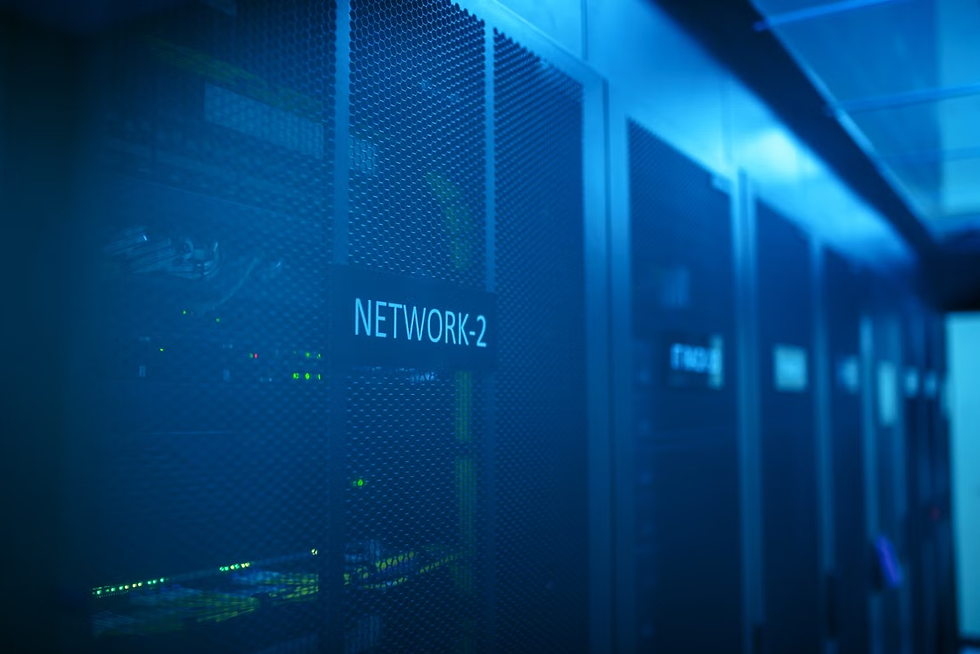
This article is a part of a series which seeks to uncover and inform upon the companies powering, building and supporting datacenter projects across the country. Regardless of if you believe it’s a bubble waiting to pop or a train rushing toward a new working reality a keen investor must be aware of not only the big names in the AI race, but also those lesser-known companies enabling AI growth via supporting data center procurement. Driving South on I-71 as you enter Northern Fayette County, you’ll come across a huge development of Amazon Web Services (AWS) datacenters, complete with the large grey rectangular buildings to host the server racks and the nearby branching silver transformers connecting the data center to the grid. Power via electricity is the number one need for these datacenters which necessitate on average up to 2 gigawatt-hours (GWh) of electricity for its operational load. More energy is needed for the full facility footprint and its cooling infrastructure. This brings me to my first industry intertwined with datacenter development, the utilities sector.
Industry 1: The Utilities Sector
NiSource Inc.
I am reminded of the connection between the utilities and AI growth often as I have
recently begun my position as Financial Analyst at NiSource (NI). Recently, NiSource
announced its strategic partnership with Amazon to provide electricity for AWS’s
datacenters in Northern Indiana which are currently under development. NiSource
(alongside its vested partners) created a subsidiary called GenCo to support the rapid
growth of large-load data-center customers without passing the cost-burden onto its
existing retail customers in the area. The model is unique because Genco will build and
own the new generation assets, having their large-load customers pay for the
associated costs, and the retail customers will see a credit on their utility bill for the
costs covered by the large load customers. The goal of this first-of-its-kind structure is to
maintain customer affordability while accessing the growth potential that comes from
large-load customers. However, NiSource, and their planned investment into data centers, are a relatively small player compared to some other corporations within the utilities industry. They have $7B of their $28B capital expenditure plan to data centers. But U.S. utility companies combined have committed over $1.4 trillion in capital expenditures over the next five years to meet the surging electricity demand from AI data centers. Powell Industries (POWL) and NextEra Energy Inc, (NEE), are two other players within the utilities sector energizing the data center demand to be aware of.
Powell Industries
POWL with a market cap of $7.2B has positioned itself to see historic surges in revenue
driven by massive electrical infrastructure orders for AI data center development. The
company is less involved with providing the actual GWh, instead it develops and
manufactures custom-engineering equipment. Its portfolio consists of integrated power
control room substations, electrical houses, switch/control gears, and circuit breakers.
Moreover, they generate continuous revenue by servicing the equipment after it has
been installed. POWL has received multiple $100M plus order for AI infrastructure
power management and its total project backlog has surpassed $1.8B.
NextEra Energy
NEE with a market cap of $175B is one of the highest values companies in the utilities
sector. Through its subsidiaries they generate, distribute and store electric power to
both retail and wholesale customers, recently they have seen a major growth in demand
for the ladder. The company is targeting 15 GWs of new energy capacity by 2035 to
power the AI boom.
A major part of their growth is centered upon its partnership with Google Cloud to jointly develop multiple large-scale datacenter campuses. Their partnership is unique in that Google is funding the 25-year restart of NextEra’s Duane Arnold nuclear plant in Iowa. Nuclear energy is often touted as a great solution to the power demand issues AI and data centers pose because of its ginormous generation capability with little pollution and costs too offset the benefits. But nuclear does comes with a greater risk of calamity following any structural/supporting problems and is subject to mixed public perception. For this reason, I believe, NEE and Google are starting relatively small with a goal of supplying up to 1 GW of power via its Duane Arnold nuclear plant.

Regardless, NEE is especially well positioned to benefit from data center development
in the future due to its diverse generation capacity breakdown. Of the 80 GW of total
power generation already at their disposal, 20.9 GW comes from wind power, 25 GW
from natural gas, 6 GW from Nuclear, and a rapidly expanding solar wing of their
generation. NEE has very large generation capacity with diverse and renewable
sources, making it a worthy partner for deals such as the $100B AI data center being
developed in western Kentucky alongside Brookfield Asset Management.
Conslusion
NI, NEE, and POWL represent only three corporations making moves to profit off of the
AI surge. There are many other utilities which are making up the over trillion dollars
pledges in capital expenditure related to datacenter development and more research
into individual companies, partnership, and deals will inform an investor even further to
make a sage decision. But the strategies followed by these companies represent a
larger industry wide shift toward energizing the AI surge and only time will tell in
determining the outcome of their plans. The next installment of this article series will uncover the companies providing construction services and equipment; earning great revenue from contracting with the developers of new data centers popping up around the country.
Sources
NiSource Inc., “SEC Filings,” NiSource Investor Relations, 2026. NiSource SEC Filing
ETF Trends, “The Trillion-Dollar Trio Goes Public: What Advisors Need to Know About SpaceX, Anthropic and OpenAI,” ETF Trends, 2026. ETF Trends article
Yahoo Finance, “Powell Industries, Inc. (POWL) Company Profile & Facts,” Yahoo Finance. Powell Industries Company Profile
U.S. News & World Report, “Best Energy Stocks for the AI Power Grid Buildout,” U.S. News & World Report. U.S. News article
Yahoo Finance, “NextEra Energy, Inc. (NEE),” Yahoo Finance. NextEra Energy Stock Profile
NextEra Energy, Inc., “NextEra Energy and Google Cloud Announce Landmark Strategic Energy and Technology Partnership to Accelerate AI Growth and Transform the Energy Industry,” NextEra Energy, December 8, 2025. NextEra Energy announcement


Comments